I’ve been working on projects that need to enroll fellow adventurers. People in those projects are on a quest, but they do need others to take the journey with them.
I’ve talked about this before. The epic form. That way of communicating that works so well on so many different dimensions. Well, turns up that this approach is really versatile and talking with my new friend Jeremy Epstein about it I’ve come to realize that marketing the journey is as important as marketing the product and telling the epic.
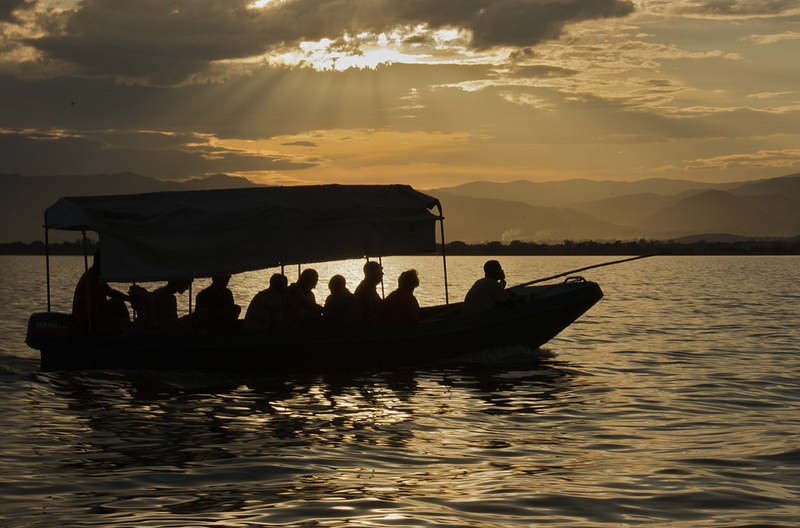
Tourism and travel agents will relate to this article, of course. But this list of tools is most useful for anyone with a product or service that goes beyond the discovery-comparing-buying flow. If you have something any more complex than that whether you want it or not, you are marketing a journey.
The factory: Something is to be born.
Innovators tend to make things come alive. No matter if it is a new spinning wheel or a really cool gadgetry little cube, it is of no importance wether your new service has or not a new cool look. If you are in it chances are it is new, original and tries to takle something you are deeply vested in. Your clients are your partners, your fellowmen and fellow women. They are the people that needs to understand the journey.
So you need people to believe in it. You need people to remember it. Yo need to be simple enough so that the difference between your thing and the rest is easy to spot and it has to be in tune with the people you are trying to bring along.
- Plausibility: People need to feel It is possible to get there. Tech, when it is innovative has always a degree of magic to it. If you have something new, then people won’t easily buy in to it. There are two major ways (and thousands more) to create a plausibility field: a) you bring pre existing evidence of your journey being possible or b) you show how similar this journey is to some other. In the first scenario you are taking advantage of not being the first out there. The front lines always take most of the arrows and there is plenty of good in not being the first. When choosing (or being left with) option B, describing the details and minucia of why you are simmilar should be the focus. Differences between this journey and previous ones must be obvious too.
- Being Memorable: Most folks do not buy a ticket on site and in the rush of the moment (of course there are many exceptions but we are not aiming for outliers here). You need to provide memory material. Something to really anchor your journey to the message so they can take action with information at hand. Since our brain remembers stories most easily, hence a story shall be told. This is mostly done by outlining three elements: The roadmap, the villain and the proposed ending for the story. The ending should not leave details out.
- Simplicity: The holy grial is not something I’m goint to solve in tow thousand words. But (I know), we can use what we now works. Make shorter. It doesn’t matter what it is, shorter is simpler. Relate to known ideas (keep in mind the “Jaws but in space” anecdote). Avoid jargon. Being simple comes at a cost: Fidelity. Keep in mind the main objective, that is, to fill the boat.
- Being different: We have just one world, one life. Things in life and on this planet tend to resemble each other. You are much better off if people can’t instantly box you inside a category with all there is to be known already visited, reviewed and catalogued. Being different comes from a focus on your unique story. There is no chance your story is ordinary, your story leading to this point that is. It is not ordinary, it can’t be. It is a product of your particular life (you or your group). Just spill your guts on the table and show you have an inside no one can repeat. If all is too much, you can choose what you feel will work best at first.
- Tuning to relevance. Not everybody hears everything and most importantly, not everyone cares about the same stuff. Your brochure can talk to a range of people, but probably not everybody. Many will stay behind this time, once you can make peace with that you’ll find relevance is greater to the group your are talking to. So tell them, what can happen in their life if they jump onboard, why is it that it is important that they do so now and finally, how staying on dry land would impact their interest far ahead.

So you have a chance to make something good.
This is the most difficult part. When you are done with this part 90% is done. Initial fellow travelers are the ones who will have the greener woods in front of them. The conquest, so to speak, begins with these people.
Deciding who to gather the is the most delicate task at hand. Alluring them to come along can only be done after you put a shape and form to your first batch of companions.
The key is talking in a way that allows them to listen without judgement (i.e. without already having a response to your story). Wanting to predict the ending of what we are listening is only natural and it happens in every domain of our lives. Our brains try to do that (preemptively jumping to conclusions) for evolutionary reasons. The brain is a big energy drain, and doing anything that can cut costs is automatically green lighted.
There is no easy work around this fact but a good hack is to add an ingredient with some unexpectedness. To achieve this we can choose to suddenly change pase, image, emotion or just volume. It does the trick most times.
Once your decision is made about the public/first-time-travelers you distribute among them the first talisman they will receive. Your talisman, the journey talisman can be anything that is mobile enough that people can carry it. But it must be human. You are marketing a human thing. Your talisman has to take human factors into it. Just to make it clear, and to use the same language, a talisman made of stone is human weather or not it hand made. A QR code is not. Painting it by hand makes no difference.
This group of people need a Talisman. They are going against the tides. So bringing something to remember why helps 5 out of 5 times.
And then there was fire
To take a journey into the unknown will requiere effort from your future clients/travelers/mates. They need to know that. In most cases basic hability is enough (e.g. speaking english with some fluency) but it can come to a point when more specific things will come in handy to make a significant difference in comfort an experience quality.
That is what I mean when I say you need to find when we will need fire, and tell people to be prepared. This will generate some of them to bring a lighter, and others to pack a spark rock. It can provoke people to go and learn fire making under adverse climate. But they need to know. What is that fire depends on your journey and its always there.
There are some social factors to have in mind. He have lost trust in a masive manner. To bring trust back is not an easy endeavor and it will take more than just a bunch of people with a mission. However, being able to walk to anybody and not be scared is most desirable. To build such a mood is on us. Leaders need to take this job with a high priority.
Walls and missed connections
We come at last to send off. We are about to set sails. So we need to check we are equipped. The big sell can be this, if you want it to be, but it could just as easily be a bring-your-own kind of situation.
The backpack must contain (and again, it is possible for you to sell this items along with the bag):
- A Notebook: technology is awesome but it does not solve everything. Bring something where you can leave a mark. Something to share when we need to. Bring something to take notes, re-draw maps and plan and make lists.
- Something to keep you inspired: It is easier once community is already there. That is why there is no platoon that takes to the planes for the first time. There’s those who have done it, and those who have not. When we take our eyes off the target it is comforting to have something to hold on to. A picture, a piece of cloth, a tattoo, a strong idea.
- Documentation: When all goes south, the user manual always seem to help. Having a place to start reading, before we start moving has a big impact on those first steps.
We do know
Belief is not enough. Our journey has an end. We will prevail. Certainty can’t be bought but neither can we sell uncertainty in this way.
Our truth does come from our emotional relationship with the journey. We want people to take it. We know is good. It can change things for better. In our hearts there is no doubt about it. So don’t talk as if there were doubts. It is not easy (and if you are the science guy in the team or the engineer it will be even more difficult for you) but you have to take the leap and let this “truth” posses you. A journey needs this kind of crazy. And it does not need, uncertainty.
Think of it this way, how many times a plane pilot came out on the PA and said, “Hello, welcome, I am your captain and if all goes well we will arrive at Frankfurt in two hours”. Neither has anyone said: “Well, thank god and technology, nowadays the probability of this plane crashing is 0,0001% so be cool”.
That is not common. So keep this part of the story for whoever asks for it and try to rest in your strength, your brain and your determination. We’ll get there.
Thanks again to Jeremy Epstein again for the pointers and inspiration for this article.
Will love to hear your thoughts on this. Cheers!
 Cincelar